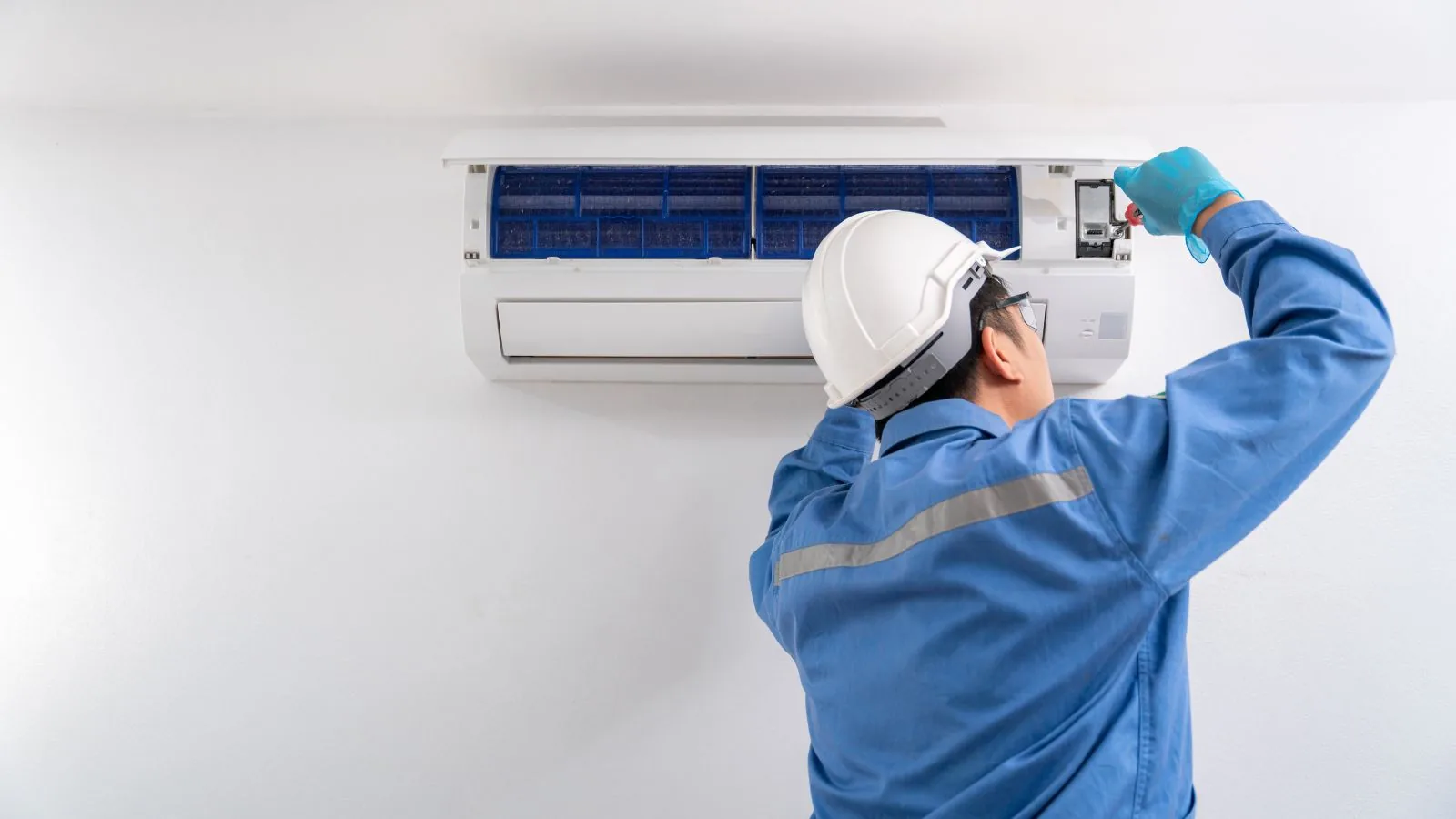
AC leak water damage repair in Huntingdon Valley, PA covers water that escapes from an air conditioner, air handler or condensate line. Cooling equipment pulls moisture from the air, and when the drain line clogs or a pan overflows, that water goes into the ceiling, a closet floor or the wall beside the unit.
We do not service HVAC equipment. A heating and cooling technician clears the line and repairs the unit. We handle the water damage left behind. For a leak from a plumbing supply line, see burst pipe water damage.
Where AC leaks show up
The air handler can sit in an attic, a basement, a closet or a utility room, and the leak shows where gravity takes it. An attic unit usually announces itself with a ceiling stain. A closet unit leaves a wet carpet or a damp wall.
| Unit location | Typical sign | Damage |
|---|---|---|
| Attic | Ceiling stain or sag | Insulation, drywall, light fixtures |
| Closet | Damp carpet, musty smell | Carpet, wall base |
| Basement or utility room | Wet floor near the unit | Slab, stored items |
| Window or wall unit | Drip below the sill | Wall, flooring |
Why condensate leaks go unnoticed
Condensate drips slowly. A clogged drain line can leak a small amount every cooling cycle, and the water soaks insulation and wall bottoms before a stain appears. The first sign is often a musty smell or a soft spot rather than a puddle.
Because the water is usually Category 1 or 2, the damage is often manageable if it is caught early, but the humid conditions around cooling equipment can encourage growth on wet materials. The mold remediation page explains what happens if growth has started.
The repair path
- 1
Technician stops the source
The drain line is cleared and the unit is checked.
- 2
Moisture mapping
Meters and imaging find wet insulation, drywall and flooring.
- 3
Remove wet material
Sagging drywall and insulation come out where they cannot dry.
- 4
Dry the area
Air movers and dehumidifiers run with readings.
- 5
Rebuild
Drywall, paint and flooring are replaced.
Slow leaks soak insulation and walls. Call (833) 521-1033 to get the area checked.
Call (833) 521-1033Habits that keep condensate lines clear
- Have the unit serviced on a regular schedule.
- Check that the drain pan is dry and clean.
- Look for water around the unit at the start of cooling season.
- Know where the shutoff switch for the unit is.
Why condensate lines clog
The drain line carries water that the cooling coil pulls from the air. Over a season, slime and debris can build up in that line, and a plain clog is the most common reason it backs up. When the line is blocked, the water fills the drain pan and overflows, or it finds a path through the cabinet seams.
Some systems have a float switch that shuts the unit off when the pan fills. If that switch is missing or failed, the unit keeps running and the water keeps coming. A heating and cooling technician checks the switch and the line, and that is the right visit to schedule after the damage is dried.
Attic units and ceilings
Many air handlers sit in attics, where a leak drops onto insulation and then onto the ceiling below. The first sign may be a faint stain that grows during hot weather. By the time it sags, the insulation above has often been wet for a while.
The crew checks the attic side as well as the ceiling, and the ceiling repair follows the steps on the ceiling water damage repair page.
Water category and what it means
Condensate begins as clean water from the air, but standing in a drain pan or line it can pick up slime and debris. Many AC leaks are treated as Category 1 or Category 2 depending on how long the water sat and what it touched. A longer leak, or one that wetted insulation for days, can change that call, and the crew makes it with the readings in hand.
What changes the cost of AC leak water damage work
Duration of the leak
Slow leaks can soak deeper than they look.
Location of the unit
Attic and closet leaks differ.
Insulation and drywall
Wet materials are removed and replaced.
Flooring
Carpet and wood add scope.
Drying
Enclosed cavities need monitoring.
Scope and price are explained before work starts. Call (833) 521-1033 and describe where the unit sits.
AC leaks and your policy
Coverage for HVAC leaks varies. A sudden overflow may be treated differently from a long, slow leak. Read your policy or ask your insurer. Take photos before cleanup and keep any technician report.
We document the damage and the scope. We do not promise approval.
Questions people ask
Is it an emergency?
It can be if water is dripping through a ceiling. Turn off the unit and call.
Do you repair the AC?
No. A heating and cooling technician does that.
Can wet insulation stay?
Usually not. It is removed and replaced.
Will mold form?
It can if materials stay wet. Prompt drying helps.
What about a window unit?
Wall and flooring below the sill are checked.
We handle AC leak damage in Huntingdon Valley (ZIP 19006) and nearby Bryn Athyn, Jenkintown and Southampton. If the water reached the ceiling, see ceiling water damage repair.