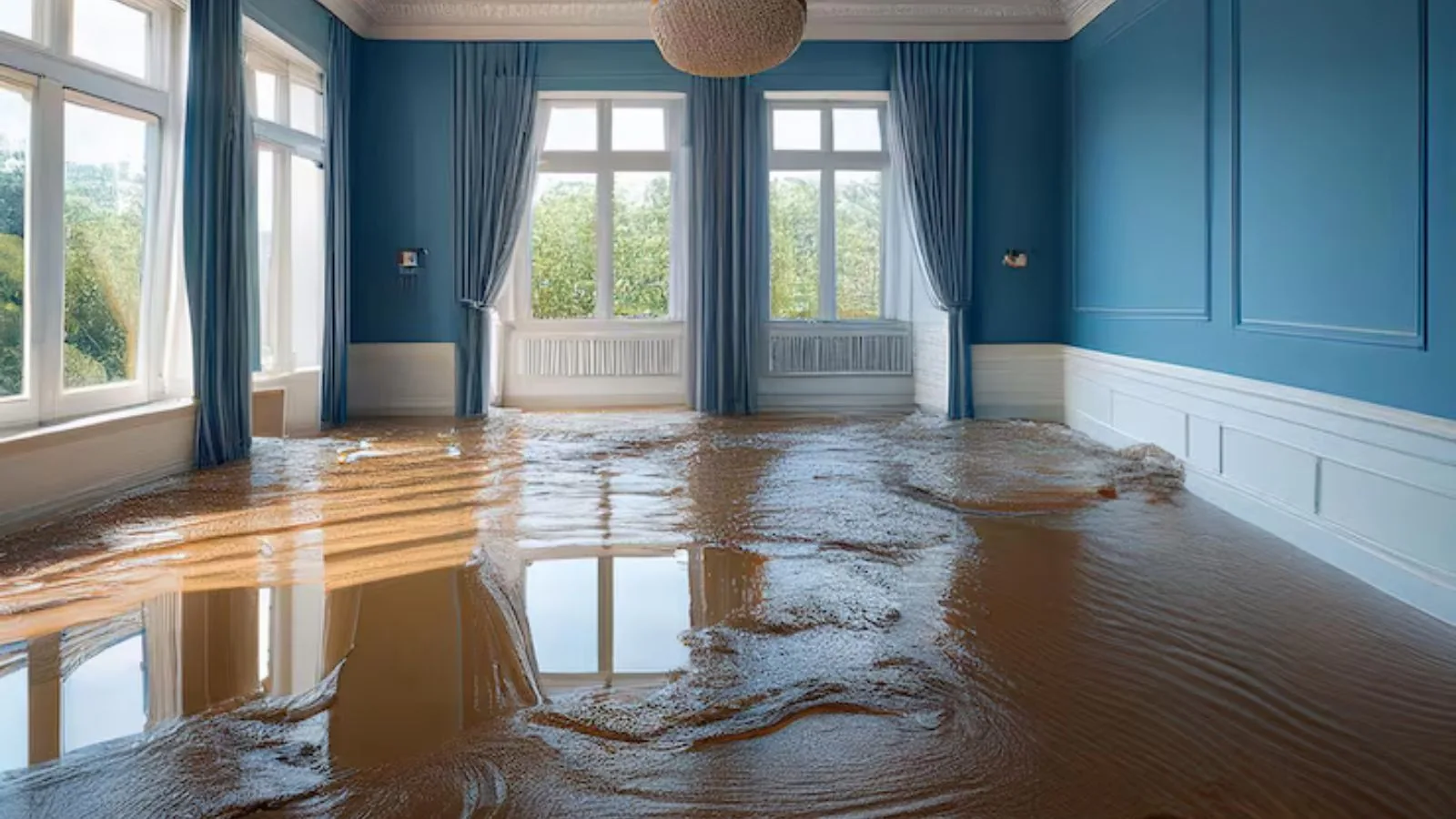
Wall and drywall water damage repair in Huntingdon Valley, PA covers drywall, plaster, baseboards and the framing behind them after a leak. Drywall is gypsum between paper. When it gets wet it softens, stains and can crumble, and the water often travels inside the wall far from the stain.
This page is about repairing walls. For the drying process, see structural drying and dehumidification. For ceilings, see ceiling water damage repair.
How walls show water damage
Signs include stains, bubbling paint, soft spots, swollen baseboards, peeling wallpaper and a musty odor. A soft spot or a hole forming in a wall means the gypsum is breaking down.
Water often wicks upward from the base of a wall. A stain a foot above the floor can mean wet drywall to a much higher point inside.
| Sign | What it means | Next step |
|---|---|---|
| Stain on the wall | Water has reached the board | Meter reading |
| Bubbled paint | Moisture behind the paint | Open and dry |
| Swollen baseboard | Wicking from the floor | Remove trim and dry |
| Soft spot | Gypsum breaking down | Cut out and replace |
Cutting out wet drywall
Drywall that stays wet loses strength and can grow mold on the paper. The crew cuts it out along a line above where the meter shows moisture, often a foot or more above the visible stain. Insulation behind it is removed if wet.
A clean cut at a stud line makes the repair easier. Photos record the cut so you and your adjuster can see what was removed and why.
Repair steps
- 1
Find the water
Meters and imaging map the wet area.
- 2
Open the wall
Wet board and insulation are removed.
- 3
Dry the cavity
Air movers and dehumidifiers dry framing.
- 4
Verify
Readings confirm dry framing.
- 5
Rebuild
New board, tape, mud, texture and paint complete the wall.
Wet walls hide mold. Call (833) 521-1033 to have the wall checked.
Call (833) 521-1033Garage walls, siding leaks and plaster
Garage drywall and walls near siding can take water from outside. A leak through siding or window trim soaks the sheathing and the drywall behind it. Plaster, common in older homes, dries slowly and can be repaired differently from drywall, and the crew will say which applies.
Why walls dry slowly
A wall is a closed cavity. Wet drywall, insulation and framing sit in still air, so they dry slowly without help. That is why a wall can look dry on the outside and still read wet on a meter days later.
The crew may drill small holes, remove baseboards or cut a long narrow opening near the floor so air can move through the cavity. Air movers and dehumidifiers then run while readings are logged. Once the cavity reads dry, the opening is closed and finished.
Painting too early traps moisture and can bring peeling paint and a musty smell back within weeks, which is why the readings come before the finishing.
Matching texture, paint and trim
A patch only looks right when the texture and paint match the rest of the wall. The crew tapes and floats the joints, matches the texture style that is already there, primes and paints, and reinstalls the trim. On a large patch, the paint is carried to a natural break such as a corner so the repair does not show.
Older homes in Huntingdon Valley may have plaster instead of drywall, or several coats of paint. Plaster work has its own steps, and it is better to say so early than to promise an invisible match.
What changes the cost of wall and drywall water damage work
Wall area
More wall means more cutting and finishing.
Material
Drywall and plaster differ.
Insulation
Wet insulation is replaced.
Drying
Closed walls need monitoring.
Finishing
Texture and paint are part of the rebuild.
Scope and price are explained before work starts. Call (833) 521-1033 and describe the wall.
Wall damage and your policy
Coverage depends on the cause and your policy. Take photos before cleanup and ask your insurer.
Our paperwork shows what the loss involved. Approval is not something we can promise.
Questions people ask
Can I paint over a stain?
Not until the wall is dry.
Does the whole wall come out?
Only the wet part.
Is mold likely?
It can grow on wet paper.
What about baseboards?
They are often removed to dry.
Do you match texture?
Yes, as part of the rebuild.
We handle wall damage in Huntingdon Valley (ZIP 19006) and nearby Bryn Athyn, Jenkintown and Southampton. For kitchen walls, see kitchen water damage.