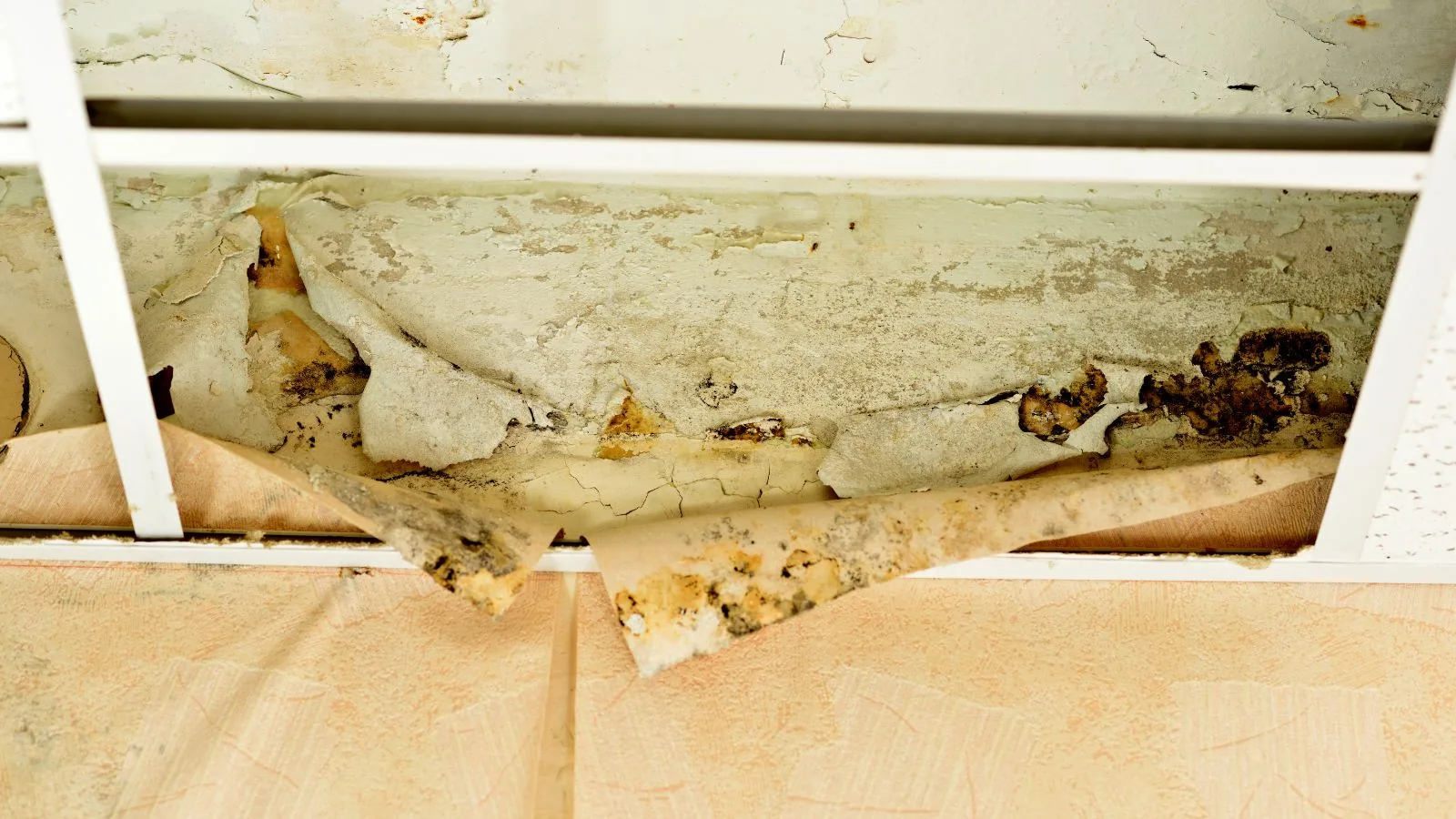
Commercial water damage restoration in Huntingdon Valley, PA covers shops, offices, restaurants, medical suites, churches, schools and multi-unit buildings. The goal is the same as in a house, which is to remove water, dry the structure and document the loss, but a business also has downtime, inventory, tenants and sometimes code or lease obligations to manage.
This page is for commercial properties and larger multi-unit losses. A single-family house has its own pages, starting with water extraction and structural drying.
When a business has water on the floor
A water loss in a commercial space is an emergency for the people who work there and for the building next door. Dispatch answers 24/7, including nights and weekends when a leak often goes unseen. While you wait, close affected areas, move inventory, files and electronics off the floor and keep customers and staff away from wet surfaces.
Shut off the water at the main only if you can reach it safely, and know where your building's shutoffs are before an emergency happens. If the water is near electrical panels, server racks or fire alarm equipment, call the utility or 911 first. For a leased space, tell the property manager or landlord the same hour so nobody is blamed later for a delay.
What makes a commercial loss different
A commercial job often involves large floor areas, concrete slabs, suspended ceilings, shared walls and mechanical rooms. The crew reads moisture across all of it and decides what must close and what can stay open. Drop ceilings and insulation above a leak can hold water for a long time without showing it, so ceiling tiles are checked above the stain, not just at it.
Multi-unit buildings add a second problem. Water that starts in one unit travels down through floors and walls into others, so the crew traces it unit by unit and documents each one separately.
| Property type | Common water source | What we check first |
|---|---|---|
| Retail and office | Supply lines, roof drains, HVAC condensate | Suspended ceilings, carpet tile, shared walls |
| Restaurant or kitchen | Grease trap overflow, dishwasher or sink supply | Floor drains, cove base, equipment pads |
| Multi-unit building | Burst riser or upstairs fixture | Units below, stairwells, shared utility rooms |
| Medical or school space | Fixture failure, storm intrusion | Tile, millwork and mechanical rooms |
Closed floors cost money. Call (833) 521-1033 and a dispatcher will start the response.
Call (833) 521-1033Keeping the business running during the work
Containment lets the crew isolate wet areas with plastic barriers so the rest of the space can keep working. Equipment is placed to keep walkways clear, and the crew schedules loud work with you. When the whole floor must close, the scope should say how many days of drying are expected so you can plan around them.
You decide what counts as critical. Server rooms, patient areas, kitchens and cash handling spaces are asked about up front so the plan puts them first.
- Written scope that names each room and the work in it.
- Moisture map by room and floor, kept as a log.
- Photos of every affected surface before demolition.
- A list of materials removed and why.
- Notes for your insurer or landlord.
Documentation that a claim or lease asks for
Commercial policies and leases usually ask for proof of what happened and when. The crew keeps timestamped photos, moisture logs and the scope as the job proceeds, and sends a summary when the readings reach a dry standard. If your policy has business interruption coverage, ask your agent what records it needs, since the details depend on the policy.
What changes the cost of commercial water damage work
Floor area and floors affected
More square footage and more floors means more equipment and monitoring.
Water category
Kitchen, restroom and storm water add safety steps.
Building materials
Carpet tile, wallboard, insulation and millwork each have their own removal scope.
Access and hours
Work around business hours or inside an occupied building affects planning.
Drying duration
Slab and block walls dry more slowly than frame walls.
Scope and price are explained before work starts. If you manage more than one site, tell dispatch and we will talk through each. Call (833) 521-1033.
Commercial losses, leases and insurance
Commercial property policies differ widely, and some separate the building owner's coverage from the tenant's. A lease may also say who handles the first response. Ask your insurer or property manager what applies, and keep a log of who was told and when.
We document the damage and the work in plain language. We do not claim approval from any carrier, and we do not bill an insurer on your behalf.
Questions people ask
Do you handle commercial water damage emergencies at night or on weekends in Huntingdon Valley?
Yes. The dispatch line is open 24 hours, which matters because many commercial leaks are found after closing. Give the address, floor, source and any tenant or access details when you call, and tell the dispatcher about alarm panels or key-card access.
Can the business stay open during repairs?
Often partly, when containment can isolate the wet area. A kitchen, a restroom or a sealed mechanical room may need to close, and the scope should say so up front.
Do you work in multi-unit buildings?
Yes. The crew traces water unit by unit and records each one separately so owners, tenants and insurers have clear records.
What about a vacant building?
A vacant property is at risk because nobody notices a leak. If you find one, call right away and tell us the building has no occupants so we can plan access.
Do you rent drying equipment?
No. Equipment is placed and monitored as part of the job rather than rented out.
Who pays for the response?
That depends on your policy and your lease. We write a scope and explain the price before work begins, and the insurance question stays between you and your carrier.
We respond to commercial calls in Huntingdon Valley (ZIP 19006) and in nearby Bryn Athyn, Jenkintown and Southampton, including offices and shops along Huntingdon Pike and County Line Road. For a house with the same problem, see flood damage cleanup.