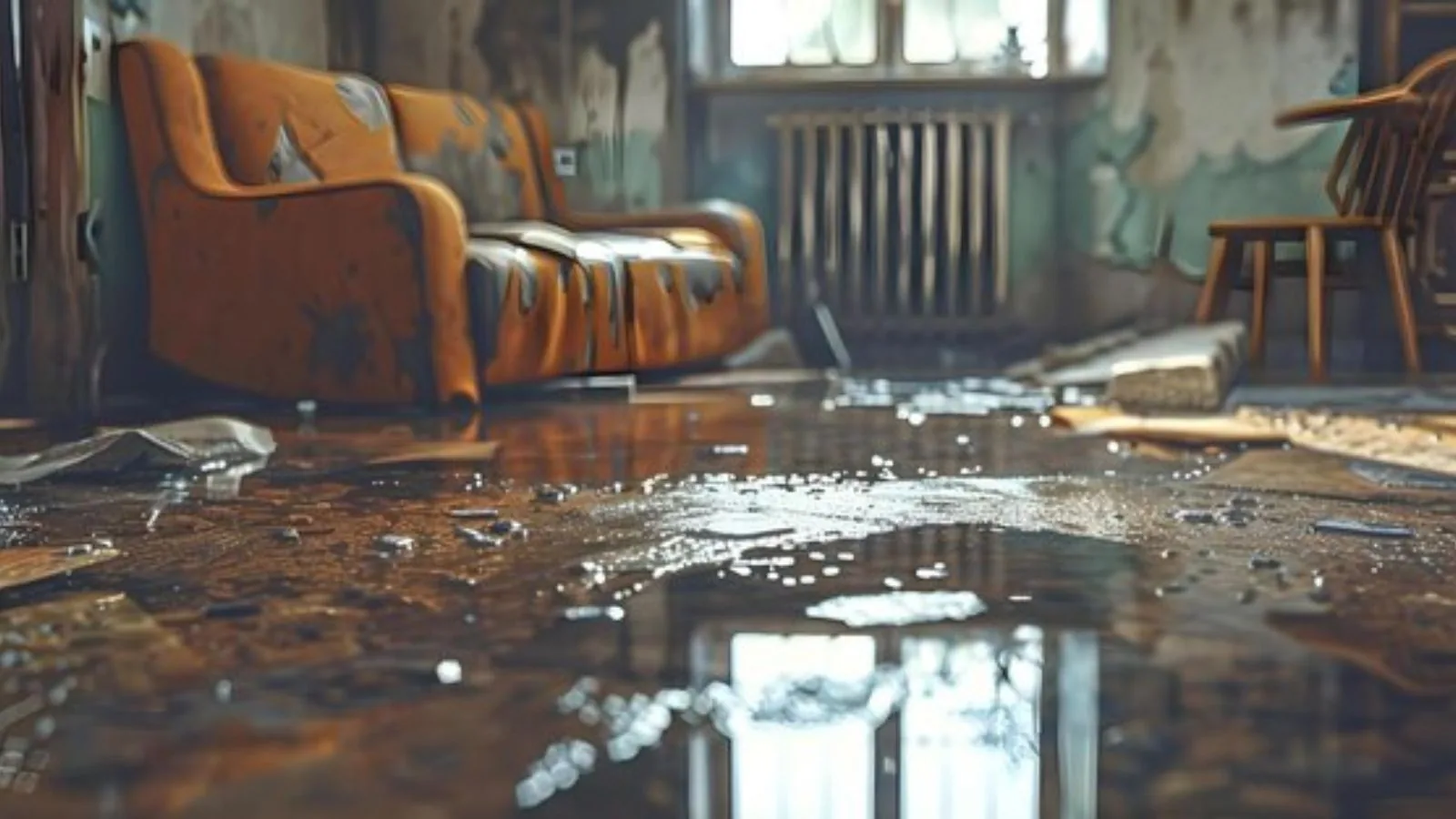
Flood damage restoration in Huntingdon Valley, PA means pumping out floodwater, cleaning and sanitizing everything it touched, and drying the structure so repairs start on sound material. Floodwater is not the same as a leaking pipe. It carries soil, street runoff and sometimes sewage, which places it in Category 2 or Category 3 under the ANSI/IICRC S500 standard, so the cleanup steps and the safety rules are stricter.
This page covers creek, groundwater and surface flooding. If the water came from a split supply line, burst pipe water damage is the closer match. If rain pushed through the roof or walls without water rising outside, see storm water damage cleanup.
When floodwater is inside your home right now
Floodwater in the house is an emergency, and our dispatch line answers 24/7. While you wait for a crew, get everyone out of standing water, keep children and pets away from it, and lift valuables, papers and electronics onto higher ground. Do not wade into water you cannot see through, because cords, outlets and appliances below the surface may be live.
Leave the breaker panel alone if you would have to stand in water to reach it, and call your electric utility or 911 for sparking, buzzing or a burning smell before you call us. If water is still rising outside, never drive through it. Bryn Athyn Fire Company warned after the July 2025 storm that going around road barriers puts its crews at risk, and six drivers needed rescue in Lower Moreland that day.
What floodwater carries and why the category matters
The water category decides what can be saved. Creek water and street runoff pick up bacteria, oils and debris on the way in, so flood loss is normally handled as Category 3 unless a professional assessment shows otherwise. Porous materials that sat in it, such as carpet pad, insulation and drywall, are usually removed rather than dried in place.
| Category | Typical source | What it means for materials |
|---|---|---|
| Category 1 | Clean supply line or rain from a clean source | Often dried in place if caught early |
| Category 2 | Washing machine or dishwasher discharge, sump overflow | Cleaned and sanitized, porous items often removed |
| Category 3 | Creek or river flooding, street runoff, sewage | Porous materials removed, hard surfaces cleaned and treated |
How a flood job runs
- 1
Make the space safe
The crew checks for electrical and slip hazards, then sets up protective barriers so contaminated water does not spread into dry rooms.
- 2
Pump out the water
Truck-mounted and portable extraction units remove standing water, working from the deepest point toward the exits.
- 3
Remove what cannot be cleaned
Soaked pad, insulation and wallboard are cut out along a measured line, and the cut is documented with photos.
- 4
Clean and sanitize
Framing, subfloor and hard surfaces are cleaned and treated before any drying equipment goes on.
- 5
Dry and monitor
Air movers and LGR dehumidifiers run while moisture meters track each wet surface until readings return to a dry standard.
- 6
Hand over the records
You receive moisture logs, photos and an itemized scope you can give your insurer.
Water is already in the structure. Call (833) 521-1033 and a dispatcher will start your flood job.
Call (833) 521-1033Why Huntingdon Valley floods the way it does
Pennypack Creek runs 22.6 miles, forms where two branches join at Bryn Athyn, and then passes through Lower Moreland and Abington on its way to Northeast Philadelphia. Homes along that corridor and on low side streets feel creek rise and runoff first. Fetter's Mill Village and the Bethayres side of Huntingdon Pike sit close enough to the creek system that a heavy rain upstream matters to them.
The July 2025 storm showed how fast it can turn. Local reports described flash flooding in Lower Moreland, with five of six water rescues at Pine Road and County Line Road and police closing the area near Philmont Avenue and Red Lion Road. One resident described a foot of water around her house. If your street was in that stretch, tell the dispatcher, because the cleanup list for a flash flood is longer than for a slow seep.
We do not state flood zones for any property. To see whether your address sits in a mapped flood hazard area, use the FEMA Flood Map Service Center, and ask your township about local drainage rules.
What can often be saved and what usually goes
After the water is out, the question is always the same: clean it or replace it. The honest answer depends on the water category, how long the material stayed wet and what it is made of.
- Usually saved: solid wood framing, concrete, tile, metal and many hard furnishings after cleaning and drying.
- Often removed: carpet pad, insulation, particleboard cabinets and drywall that wicked contaminated water.
- Case by case: hardwood flooring, solid wood furniture, plaster and some appliances, decided with moisture readings.
- Not salvageable after contact with contaminated water: mattresses, stuffed items and most paper goods.
What changes the cost of flood damage cleanup work
Water category
Category 3 flood loss takes more labor and disposal than a clean-water loss.
Depth and area
How many rooms and how many inches of water changes the pumping and removal scope.
Materials affected
Carpet, pad, drywall and insulation add removal and rebuild line items.
Drying days and equipment
More wet surfaces need more air movers, dehumidifiers and monitoring visits.
Rebuild scope
Replacing flooring, wallboard and trim is a separate repair scope after drying.
Each factor goes into a written scope that is explained before work starts. Want a real number for your house? Call (833) 521-1033 and describe what you see.
Flood damage and your insurance policy
The Pennsylvania Insurance Department says standard homeowners policies do not include flood coverage. Flood protection usually comes from a separate policy, either through the National Flood Insurance Program or a private insurer. Water that comes from a failed pipe inside the house is often treated differently, so read your policy or ask your insurer which type of loss you have.
Contact your insurer right away, keep a note of who you spoke with, take photos and video before cleanup and make temporary repairs that stop further damage. We provide photos, moisture readings and an itemized scope. We do not promise coverage or approval of a claim.
Questions people ask
Do you handle flood damage cleanup emergencies at night or on weekends in Huntingdon Valley?
Yes. Dispatch answers around the clock, including nights, weekends and holidays. Tell the dispatcher where the water is, how deep it is and whether you smell sewage or fuel. Move to a dry floor, keep out of standing water and stay clear of the panel if it is wet.
How long does drying take after a flood?
Most structural drying runs about three to five days, but dense materials such as hardwood and plaster can take longer. We take daily moisture readings and keep equipment in place until the surfaces meet a dry standard, not until a calendar date.
Can I clean up floodwater myself?
Small, clean-water spills yes. Creek or street floodwater is a different matter because it carries contamination, and the EPA advises against leaving wet materials in place. Wear protective gear, keep children and pets out and ask for an assessment before you decide what to keep.
Will mold grow after a flood?
Mold needs moisture and time. EPA guidance says wet materials dried within 24 to 48 hours generally do not grow mold, which is why fast extraction and drying matter. If growth has started, the mold remediation page explains the next step.
What if the basement took most of the water?
The below-grade room has its own scope, including sump failure and finished-space contents. See basement water damage cleanup for how that job differs.
Is flood cleanup the same as waterproofing?
No. Restoration removes and dries the damage that already happened. It does not change how water reaches your foundation, so ask a waterproofing contractor about prevention.
Flood calls come from across the area. We work in Huntingdon Valley (ZIP 19006) and nearby Bryn Athyn (19009), Jenkintown (19046) and Southampton (18966), as well as the Bethayres and Fetter's Mill neighborhoods. Standing water that needs pumping before anything else is covered on the water extraction page.