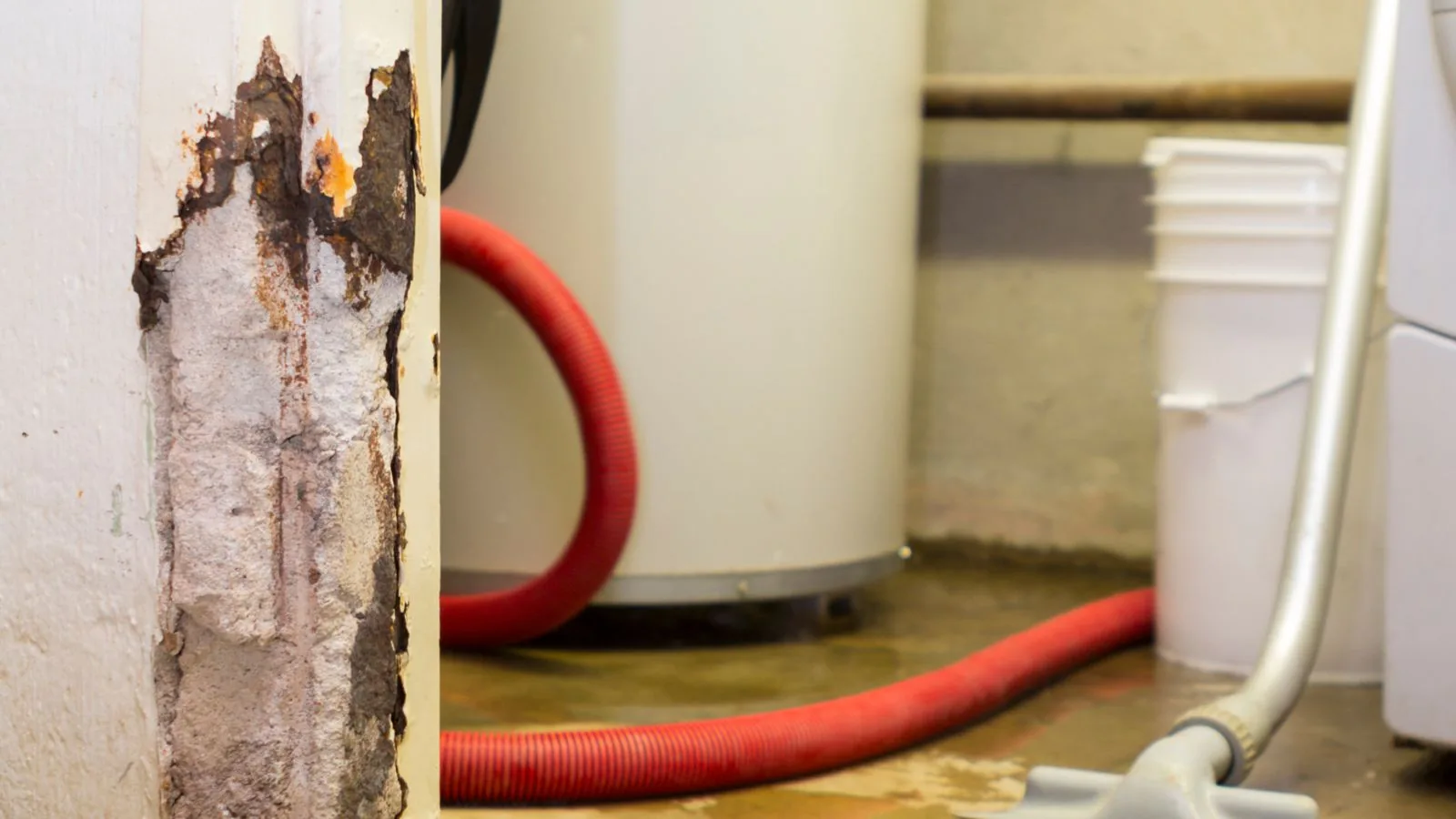
Slab leak water damage cleanup in Huntingdon Valley, PA deals with water that escapes from supply or drain lines buried in or under a concrete slab. The leak itself is a plumber's job. What we handle is the damage it causes, which is wet flooring, damp baseboards, wet subfloor and moisture in walls.
Not every home here has a slab floor. Some have basements and some have crawl spaces, and we do not assume which yours has. This page is for homes, additions or garages where pipes run in or under concrete. For a basement see basement water damage cleanup, and for an open crawl space see crawl space water damage.
Floor feels warm or the water bill jumped?
People rarely search for a slab leak by name. They search for a warm spot on the floor, the sound of running water when everything is off, damp carpet along one wall or a water bill that climbs without a reason. Those are the signs this page deals with.
A plumber confirms the leak with listening gear or a pressure test, and then the damage can be dried and repaired.
When water is coming up through the floor
Water rising through a floor is an emergency, and dispatch answers 24/7. Shut off the main water valve to the house, which stops pressurized supply leaks. Keep people off wet flooring that could be slippery, and lift furniture, rugs and electronics. If you smell gas or see sparks, leave and call the utility or 911.
Do not drill into the slab or pry up flooring yourself. A plumber needs the leak location, and the crew needs the moisture pattern intact. Photograph the wet area and note when you first saw the sign.
How slab leak damage differs
Slab leaks run for a long time before they are seen, because the pipe is hidden. The concrete carries water sideways, so the wet spot can appear far from the failed section. Flooring over the slab, such as hardwood or laminate, absorbs water and lifts, and walls take it up through the bottom plate.
That is why we map moisture across the whole room and not just the visible stain.
| What you see | What it can mean | What the crew checks |
|---|---|---|
| Warm spot on the floor | Hot-water line leaking below | Floor temperature and moisture |
| Hissing or running sound | Water moving in a pipe | Meter and listening during a quiet period |
| Damp carpet along one wall | Moisture wicking from the slab | Wall base and carpet tack strip |
| Higher water bill | Water escaping unseen | Plumber testing the lines |
The damage cleanup
- 1
Shut off and test
The main is closed, and the plumber finds the leak.
- 2
Map the moisture
Meters and thermal imaging show how far the water has spread.
- 3
Remove wet finishes
Carpet, pad and damaged flooring are lifted where they cannot dry.
- 4
Dry
Air movers and dehumidifiers dry the slab surface, baseboards and lower walls.
- 5
Repair
Flooring, base and paint restore the room.
A hidden leak keeps soaking the floor. Call (833) 521-1033 and shut off the main.
Call (833) 521-1033Slabs, flooring and drying times
Concrete holds water and releases it slowly, so slab-on-grade rooms may need a longer drying period than framed floors. Engineered wood and laminate are the most sensitive to slab moisture, tile the least. We confirm readings before new flooring goes down so moisture does not get trapped under it.
If wet flooring was glued to the slab, removal can be messy, and the scope should say so.
Who does what on a slab leak
- Plumber: finds the leak, repairs or reroutes the line.
- Restoration crew: extracts, removes wet material, dries and documents.
- Flooring contractor: installs new finishes after the readings are dry.
- You: shut off the main, take photos and call your insurer.
What changes the cost of slab leak water damage work
Leak duration
Longer leaks soak deeper.
Floor type
Hardwood and laminate need more work than tile.
Wall exposure
Water in the bottom plate adds drywall work.
Drying
Slabs dry more slowly than framed floors.
Plumbing access
The plumber's repair method can affect the scope.
Scope and price are explained before work starts. Call (833) 521-1033 and describe the signs.
Slab leaks and your insurance policy
Coverage for slab leaks varies widely, and many policies treat the leak and the resulting damage differently. Read your policy and ask your insurer what applies to the plumbing, the access and the water damage. Photograph signs and keep plumber reports.
We document moisture and the scope. We do not promise approval.
Questions people ask
Do you handle slab leak water damage emergencies at night or on weekends in Huntingdon Valley?
Yes. Dispatch answers at night, on weekends and on holidays. Tell us whether the main is shut off, where the floor is wet and whether you can hear water running with all fixtures off.
Can a slab leak be seen?
Not directly. Signs include warm spots, sounds and damp flooring, and a plumber confirms it.
Do all homes have slabs?
No. Some have basements or crawl spaces.
Can the flooring be saved?
Tile often can, while wood and laminate often cannot.
Will you dig into the slab?
No. That is the plumber's work.
How long does drying take?
Often several days, with readings deciding.
Slab leak damage calls come from Huntingdon Valley (ZIP 19006) and nearby Bryn Athyn, Jenkintown and Southampton. If flooring was hardwood, see hardwood floor water damage repair, and for carpet see carpet water damage.