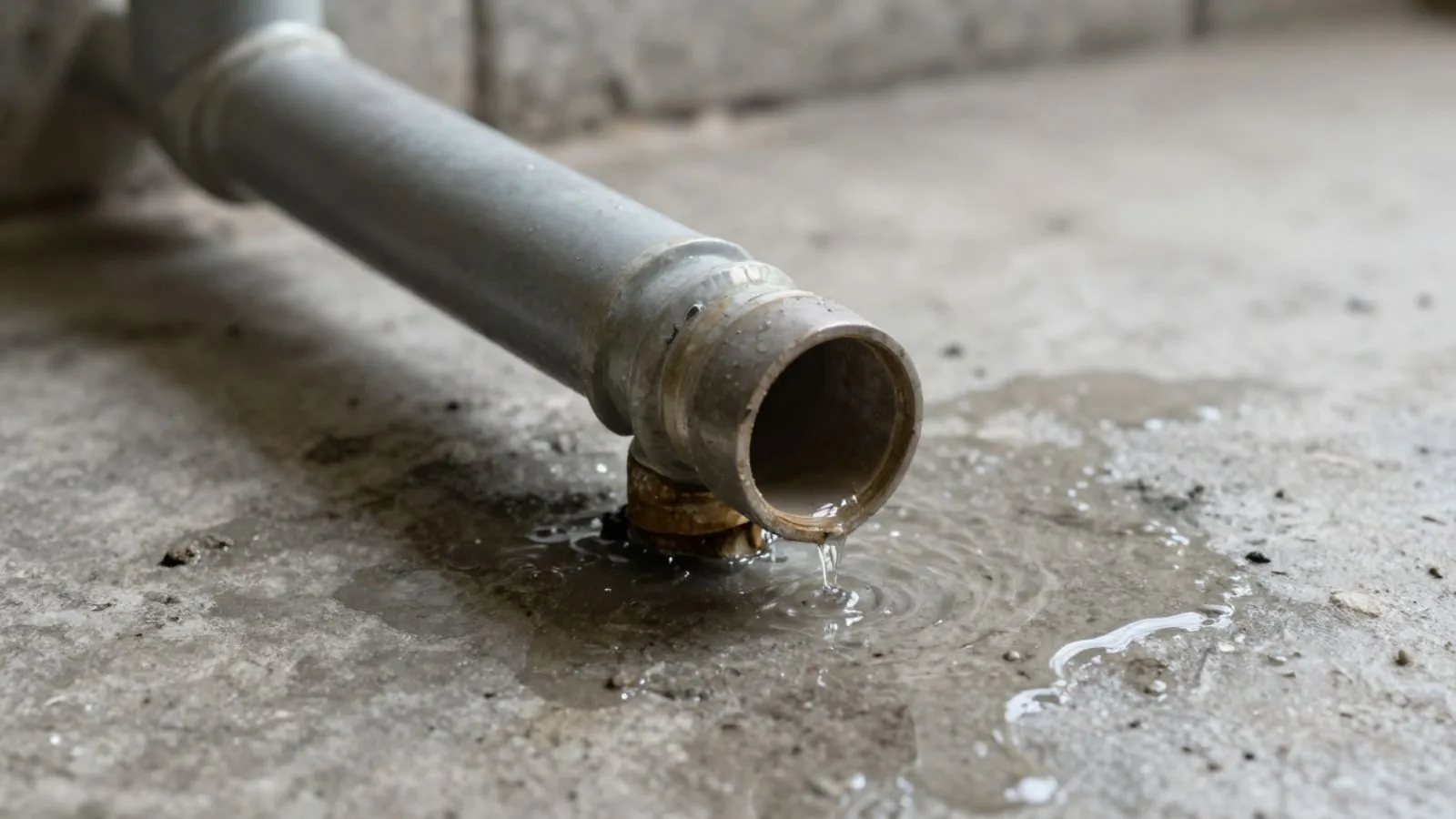
Frozen pipe water damage restoration in Huntingdon Valley, PA covers what happens after a pipe freezes, splits and thaws. The danger is not the ice itself. A split pipe often leaks only when the ice melts, so the flooding can begin hours after the cold snap ends, sometimes when nobody is home.
This page is about the freeze and thaw cycle. A pipe that failed under pressure in mild weather is covered on burst pipe water damage. Winters in southeastern Pennsylvania bring freezing nights, so unheated spaces such as garages, crawl spaces and exterior walls are where the trouble starts.
When a frozen pipe has thawed and water is flowing
Thawed pipes can flood without warning, and dispatch answers 24/7. If you hear running water or see wet ceilings after a cold night, close the main shutoff at once. If you cannot reach it, your utility can shut off at the curb. Open a faucet on the bottom floor to relieve pressure, and keep people out of rooms where the ceiling is bulging.
Never use an open flame, a propane heater or a blowtorch to thaw a pipe. Slow, indirect warmth is safer, such as moving a space heater into the room and letting the pipe warm. If there is any sign of electrical contact with water, call your electric utility or 911 before you call us.
What a freeze actually does to a pipe
Water expands as it freezes, and the pressure builds between the ice plug and the closed faucet, not under the ice. The split often forms in the pipe section downstream of the plug, which is why the failure point can be a few feet from the frozen spot. Copper, steel and plastic all can split, though they do so differently.
Pipes in outside walls, attics, garages, crawl spaces and under sinks along exterior walls are the usual places. A pipe that is frozen but not yet split may only show a trickle or no water at all.
| Stage | What you notice | What to do |
|---|---|---|
| Frozen, no split yet | Low or no flow at one fixture | Keep the tap open and warm the space slowly |
| Thawing | Drip, hiss or wet spot | Close the main and open a low tap |
| Split and flowing | Running water, bulging ceiling | Shut off, call dispatch and a plumber |
| After the leak | Damp walls and floors | Extraction and drying |
Cleanup after a thaw
- 1
Stop the water
The main is closed, and a plumber repairs or replaces the split section.
- 2
Extract
Pumps and wands remove surface water from floors.
- 3
Check exterior walls
Moisture meters and thermal imaging look inside the wall cavities along the cold side.
- 4
Remove wet insulation
Insulation in outside walls holds water and has to come out.
- 5
Dry and verify
Air movers and dehumidifiers dry the cavity until readings are normal.
Thaw floods start without warning. Call (833) 521-1033 once the main is closed.
Call (833) 521-1033Why cold-weather leaks are bigger than they look
Many freeze failures happen in places people do not visit often, such as an attic corner, a garage wall or a crawl space. The leak can run for hours before it is found, and the water is often soaking insulation and finishes on both sides of the wall. A ceiling stain on the floor below is the common first sign.
We do not state how often pipes freeze at any address. Local conditions vary house to house, so the crew looks at the walls and spaces that matter for yours.
Practical steps for the next cold night
Prevention is a plumber's and homeowner's job, and we are glad to say so. Basic steps are widely used.
- Keep the heat on and let cabinet doors under sinks on outside walls stay open.
- Let a faucet drip slowly during a hard freeze if you have pipes in exposed walls.
- Disconnect and drain outdoor hoses and shut off outdoor spigots from inside.
- Know where your main shutoff is and make sure it turns.
What changes the cost of frozen pipe water damage work
Water released
How long the pipe leaked before it was found.
Wall and ceiling area
Water in exterior walls spreads along cavities.
Insulation
Wet insulation in outer walls is usually replaced.
Drying days
Closed cavities need monitoring, not just fans.
Repair scope
Drywall, trim and paint follow drying.
Scope and price are explained before work starts. Call (833) 521-1033 and describe what you saw.
Freeze damage and your policy
Sudden freeze damage is often covered, but policies can have conditions about keeping the heat on or draining a vacant home. Read your policy and ask your insurer. Photograph the damage before cleanup and make temporary repairs that stop further damage.
We document with photos and moisture readings. We do not promise approval.
Questions people ask
Do you handle frozen pipe water damage emergencies at night or on weekends in Huntingdon Valley?
Yes. Dispatch answers at night, on weekends and on holidays, which is when freeze events usually peak. Tell us whether the pipe has already thawed, where water is showing and whether the main is closed.
Can I thaw it myself?
Gently, yes, with indirect warmth and the tap open. Never use an open flame.
How do I know a pipe split?
Water appears after the thaw, often as a wet ceiling or damp wall. A plumber confirms the split.
Does insulation matter?
Yes. Wet insulation in an outside wall is usually removed and replaced.
Should I leave the heat on while away?
Many insurers expect it, and it is a sensible habit. Check your policy for wording.
What if the pipe is in a crawl space?
The crew works under the house. See the crawl space water damage page.
Frozen pipe calls come from Huntingdon Valley (ZIP 19006) and nearby Bryn Athyn, Jenkintown and Southampton. For wet ceilings after a thaw, see ceiling water damage repair.