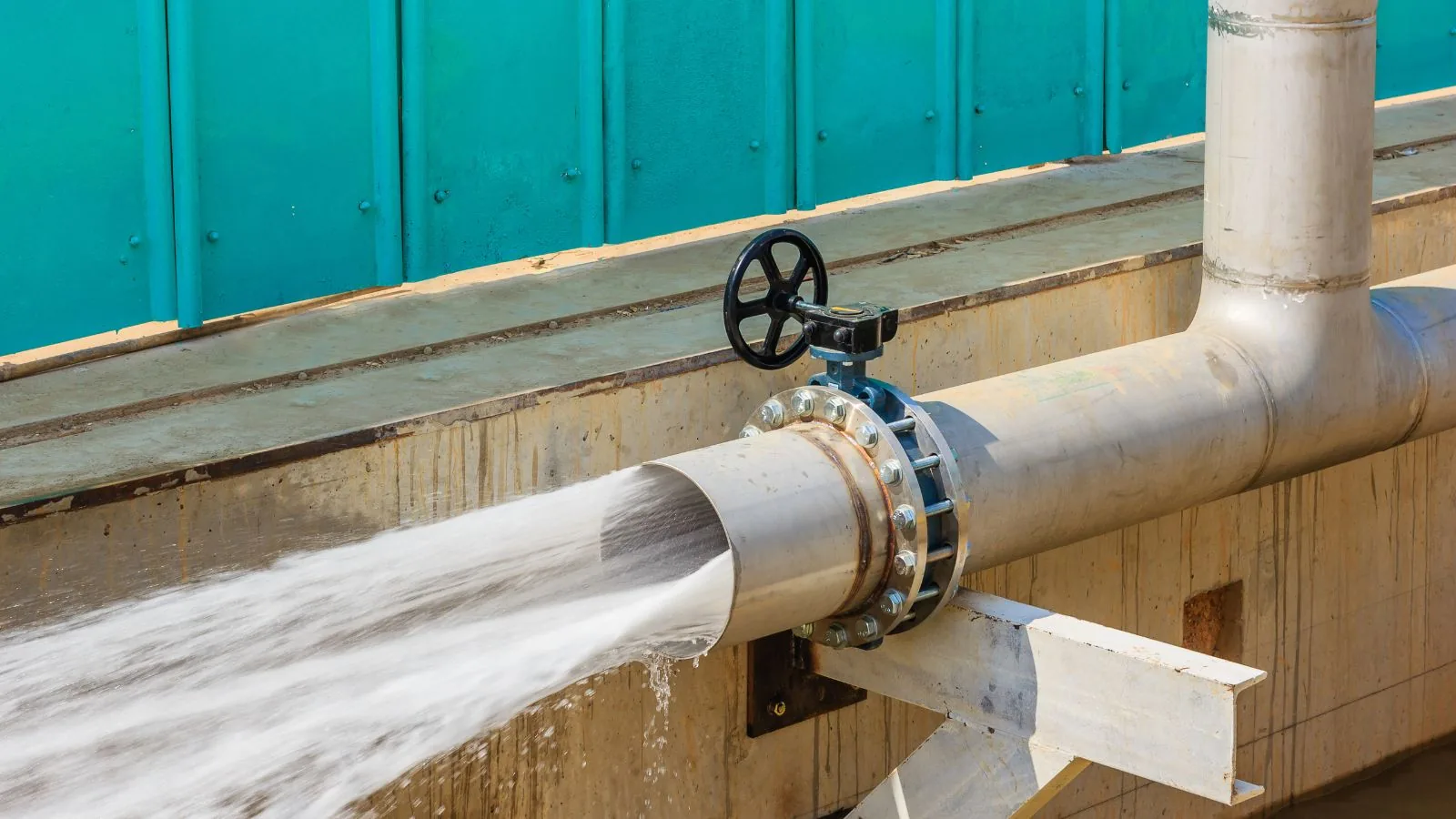
Burst pipe water damage cleanup in Huntingdon Valley, PA deals with what a failed pressurized supply line leaves behind. Supply pipes hold water under constant pressure, so a split or a failed joint releases far more water, far faster, than a slow drip. The water soaks floors, runs down inside walls and drops through ceilings, often before anyone notices.
This page is about the damage from a burst line. A pipe that failed after a hard freeze has its own page at frozen pipe water damage, and a failed tank has its own at water heater leak cleanup. Fixing the pipe itself is a plumber's work.
When a pipe has burst and water is still running
A burst pipe is an emergency every minute it runs, and dispatch answers 24/7. Close the main shutoff valve first. It is usually near where the water line enters the house, often by the meter or the water heater. If you cannot close it, your water utility can shut off the supply at the curb. Aqua Pennsylvania supplies water in Lower Moreland and Abington Township.
Once the water is off, open a faucet on the bottom floor to drain the line, turn off power to wet rooms only if the panel is dry and you can reach it safely, and lift valuables off the floor. Do not use ceiling fixtures that are dripping. If water is near outlets or the panel, call your electric utility or 911 before you call us.
Why pressure makes this different
A supply line in a typical house runs at household water pressure all day. When it fails, water is released continuously until the valve closes, which can mean hundreds of gallons in a short time. That is why the first ten minutes decide how much of the structure gets wet.
The path matters too. Water from a pipe in a wall travels down the stud bays and soaks the baseboard, flooring and subfloor, and it can travel sideways along joists to rooms that look dry.
| Where the pipe failed | Where the water goes | What the crew checks |
|---|---|---|
| Inside a wall | Down the stud bay to the floor and room below | Wall base, insulation, ceiling below |
| Under a sink or vanity | Cabinet base, then flooring | Cabinet bottoms, subfloor |
| In the ceiling | Ceiling board, then the floor below | Joist bays, light fixtures |
| In a basement or garage | Slab and walls | Stored items, lower drywall |
The cleanup after a burst line
- 1
Water off, source flagged
The supply is closed, and a plumber repairs the pipe while the crew handles the water.
- 2
Extraction
Pumps and wands remove surface water and pull it out of carpet and pad.
- 3
Open and inspect
Wall bases and ceilings are opened where moisture meters and imaging show wetness.
- 4
Dry the structure
Air movers and dehumidifiers dry framing and subfloor, checked daily.
- 5
Repair
Drywall, trim, flooring and paint go back once readings are dry.
Burst pipes keep running until the valve is shut. Call (833) 521-1033 after the water is off.
Call (833) 521-1033What to document before cleanup
Before anything is moved, take photos and video of the source, the water and the affected rooms. Note the time you shut off the supply and who you called. A written list of damaged items helps when you talk to your insurer.
We add moisture logs and an itemized scope as the job proceeds, so the records line up with what was actually done.
- Photos of the failed pipe and the area around it.
- Video of each wet room, ceiling and wall.
- The time the water was shut off.
- A list of damaged contents and furniture.
Pipes in older and newer homes here
Huntingdon Valley has houses from many eras, and we do not assume what any given house has behind its walls. Supply lines may be copper, plastic or steel depending on when the plumbing was done or last replaced. A plumber identifies the material, and a failed joint or a split can happen with any of them.
If a pipe failure happened during cold weather, the frozen pipe page covers the thaw and the damage that follows.
What changes the cost of burst pipe water damage work
Rooms and floors affected
Water that travels through ceilings and walls widens the scope.
Time running
A longer run soaks deeper into materials.
Materials
Carpet, hardwood, drywall and insulation each add removal or drying.
Drying days
Closed walls and subfloors need more monitoring.
Repair scope
Rebuilding finishes is a separate scope after drying.
Scope and price are explained before work starts. Call (833) 521-1033 and describe what you see.
A burst pipe and your policy
Sudden and accidental pipe failures are often covered by homeowners insurance, while gradual leaks and neglect often are not. Read your policy or ask your insurer, call them promptly and keep notes of who you spoke with. The Pennsylvania Insurance Department advises taking photos and video before cleanup and making temporary repairs that stop further damage.
We document the damage and the scope. We do not promise coverage.
Questions people ask
Do you handle burst pipe water damage emergencies at night or on weekends in Huntingdon Valley?
Yes. Dispatch answers at night, on weekends and on holidays. Supply lines often fail in the middle of the night when pressure is highest. Tell us where the water is, whether you have shut off the main and whether it is dripping through a ceiling.
Do I need a plumber first?
Yes for the pipe, and we can work alongside. The water must be shut off before drying makes sense.
How fast does water spread?
Quickly. Within hours it can soak carpet, pad, drywall and flooring, so call as soon as the supply is off.
Can wet insulation be saved?
Usually not. Wet batts hold water and are normally removed.
What if the pipe is inside a wall?
The crew opens the wall where readings show moisture, and the plumber repairs the pipe.
Will the walls need to come out?
Sometimes. Drywall that stayed wet or sagged is usually cut out, and the cut line is documented.
Burst-pipe calls come from Huntingdon Valley (ZIP 19006) and nearby Bryn Athyn, Jenkintown and Southampton, including Bethayres. If the water ran into a kitchen, the kitchen water damage page covers cabinets, and the wall and drywall page covers wall repair.