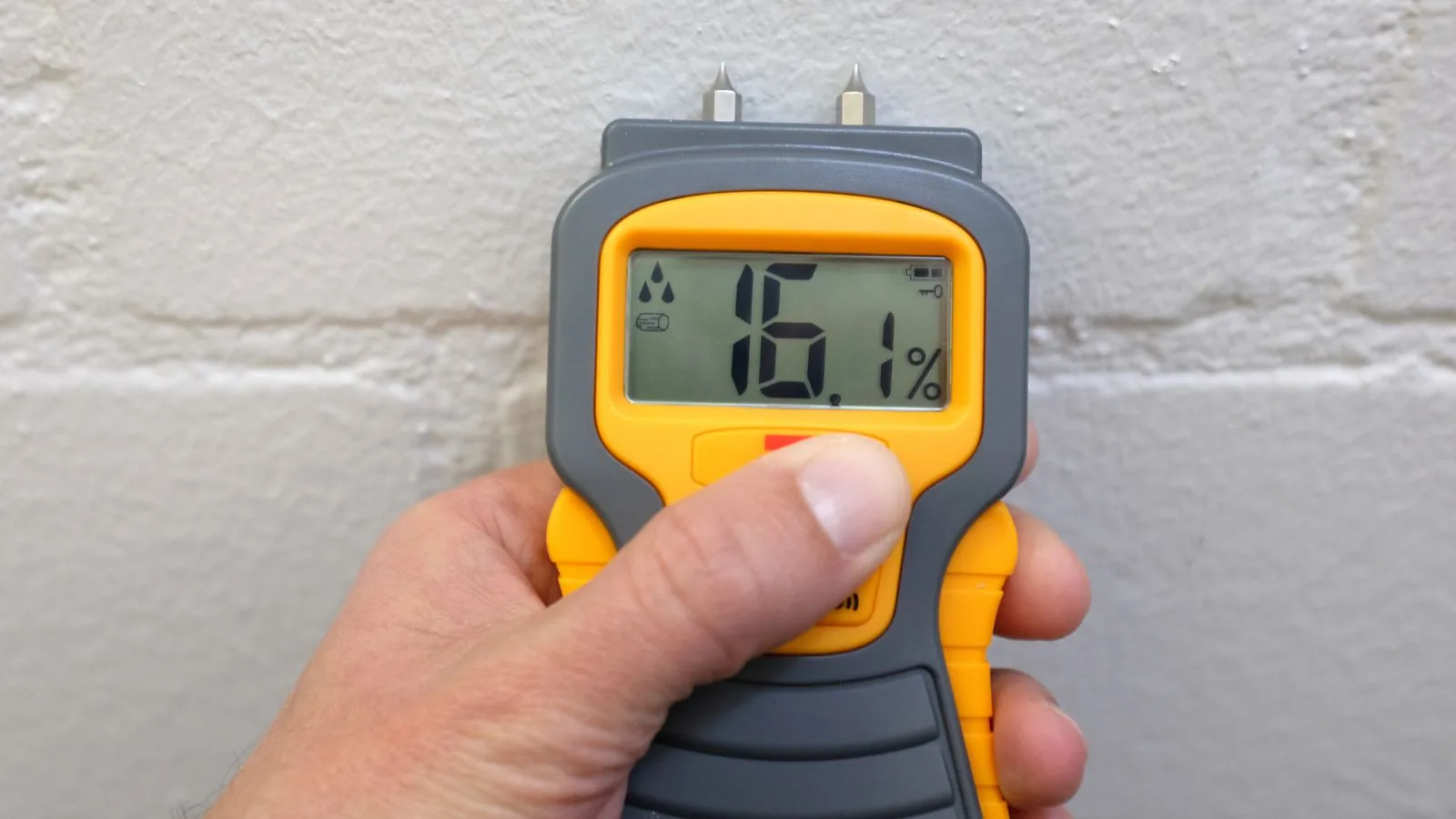
Structural drying and dehumidification in Huntingdon Valley, PA is the process of getting moisture out of floors, walls and framing after water has been removed. It uses moisture meters, thermal imaging, air movers and dehumidifiers, and it continues until the readings match a dry standard.
This page covers the drying stage, which is also called water mitigation. For removing standing water first, see water extraction. For floods that reached several rooms, see flood damage cleanup.
Walls still feel damp or smell musty?
Most people do not search for structural drying. They search for walls that feel cool, a musty smell, baseboards that are swelling or carpet that stays damp after cleanup. Those are signs that moisture is still inside the structure.
If you see these after water has been mopped or vacuumed, the surfaces need measuring and drying, not just wiping.
Water mitigation and how drying works
Water mitigation means limiting damage and drying the structure. Air movers push air across wet surfaces to lift moisture. Dehumidifiers pull that moisture out of the air so it does not settle back. Meters track each surface, and the crew adjusts equipment as readings change.
Air movers alone are not enough. Without dehumidification, the moisture goes into the air and back into materials.
| Tool | What it does | Why it matters |
|---|---|---|
| Moisture meter | Reads moisture in materials | Shows what is wet |
| Thermal camera | Shows temperature patterns | Finds hidden wet areas |
| Air mover | Moves air across surfaces | Evaporates moisture |
| LGR dehumidifier | Removes moisture from air | Prevents re-wetting |
How long drying takes
Most jobs run three to five days of continuous drying. Dense materials like hardwood, plaster and concrete take longer. The crew visits daily to take readings and moves equipment as surfaces dry.
Equipment stays until the readings reach a dry standard. That is why a calendar date is not a good guide.
What the daily visits include
- 1
Take readings
Meters check each wet surface.
- 2
Adjust equipment
Air movers and dehumidifiers are moved.
- 3
Record progress
Logs show trends.
- 4
Remove materials if needed
Surfaces that will not dry are opened.
- 5
Confirm dry
Final readings are recorded.
Damp structure invites mold. Call (833) 521-1033 to get readings and a drying plan.
Call (833) 521-1033Equipment and rental questions
Callers often ask about renting air movers and dehumidifiers. Equipment here is placed and monitored as part of the job, not rented out. Placement matters, and unmonitored equipment can leave pockets wet.
Why LGR dehumidifiers and air movers work together
LGR stands for low grain refrigerant. These dehumidifiers keep pulling moisture from the air even when the room air is already fairly dry, which matters late in a job when the walls are releasing the last of their moisture. Standard household dehumidifiers slow down at that stage.
Air movers are placed to sweep air across walls, floors and the lower part of cavities. In a closed wall, small holes may be drilled at the base so air can enter, and the crew explains where and why. Doors and windows to affected rooms usually stay closed so the dehumidifiers work on a sealed volume of air.
Setting a drying goal
A crew needs a target. One common approach is to take readings on the same material in a dry part of the house and use that as the reference. Drywall in an unaffected room, a dry subfloor or a dry stud gives a number to aim for, and the wet surfaces are dried to that level. The log shows the trend each day so you can see the numbers move.
Some materials never dry well. Wet insulation, swollen particleboard and sagging drywall are removed because they hold water longer than the structure around them can tolerate. Hardwood, plaster and concrete are given more time.
What you will notice during a drying job
- Steady noise from fans and dehumidifiers, which can run day and night.
- Warm, dry air in the rooms being dried.
- Higher electricity use while equipment runs.
- Small holes at the base of walls, sometimes covered by trim.
- Daily visits for readings and adjustment.
What changes the cost of structural drying work
Materials
Dense materials dry slowly.
Wet area
More surfaces need more equipment.
Water category
Contaminated water changes the scope.
Drying days
Readings decide the length.
Monitoring
Daily visits are part of the job.
Scope and price are explained before work starts. Call (833) 521-1033 and describe what is wet.
Drying logs and your claim
Drying logs and moisture readings help document a loss. Coverage depends on the cause and your policy, so ask your insurer.
We record readings and the scope. We do not promise approval.
Questions people ask
Can fans alone dry a wall?
Not reliably. Dehumidification is needed.
How do you know it is dry?
Meter readings match a dry reference.
Does drying stop mold?
Dry materials are less likely to grow mold.
Do you rent equipment?
No. It is placed as part of the job.
Why is it noisy?
Air movers and dehumidifiers run continuously.
We handle structural drying in Huntingdon Valley (ZIP 19006) and nearby Bryn Athyn, Jenkintown and Southampton. For wet walls that need repair afterward, see wall and drywall water damage repair.