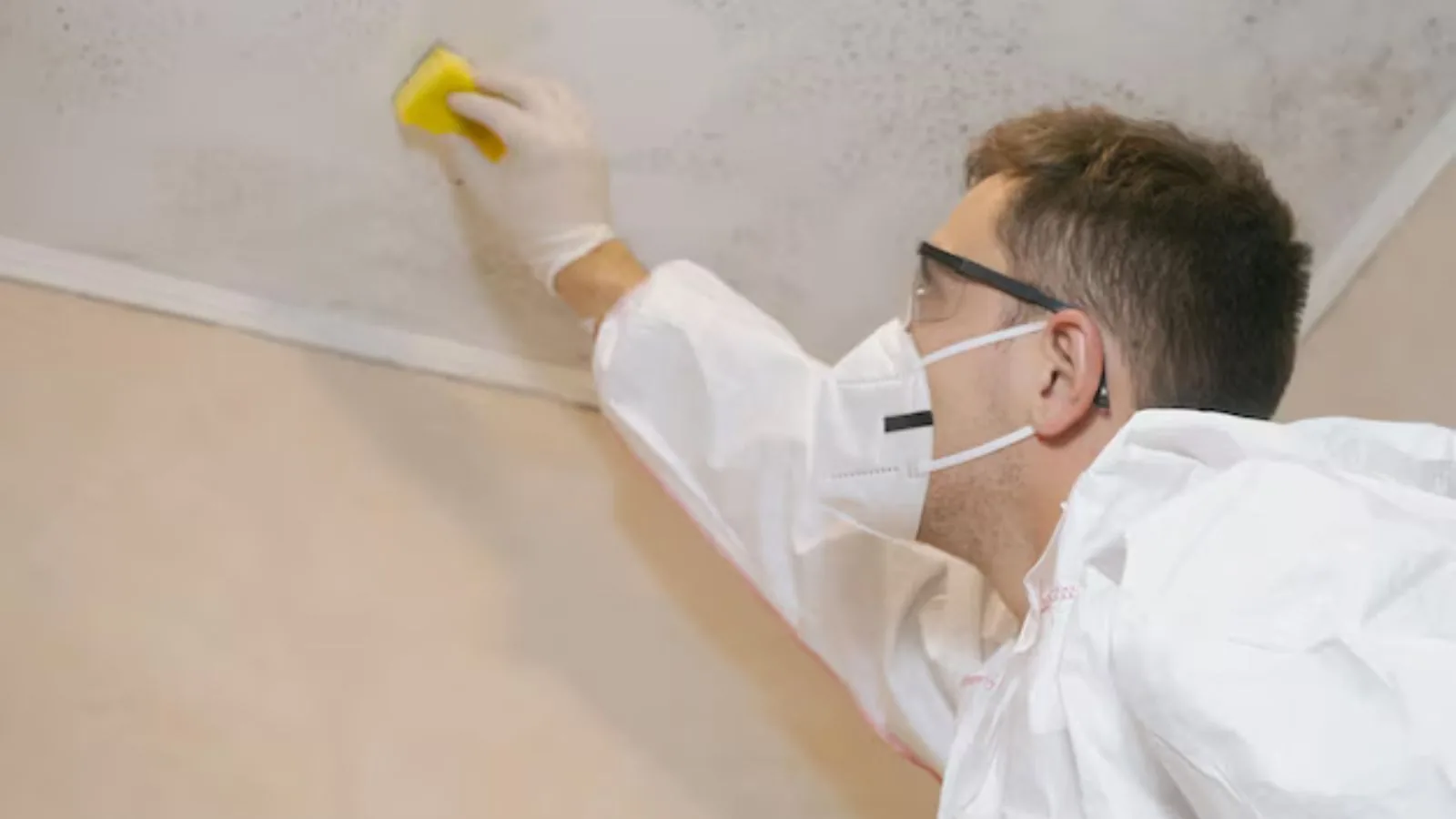
People use mold and mildew almost interchangeably. Mildew usually describes a flat, powdery or downy growth on a surface, often in a shower or on a damp window sill. Mold is the broader word and covers growth that can penetrate materials. A homeowner can handle some of this safely. Some of it needs a professional.
This guide sets out where the line usually sits and how to clean the small jobs without making them bigger. For anything larger, see our mold remediation service.
Surface growth you can usually handle
Mildew on tile grout, a plastic shower curtain, a window frame or a painted wall that dried quickly is a surface problem. EPA guidance on mold in homes treats areas of about 10 square feet or less as something a homeowner can clean with care.
Wear an N95 respirator, gloves and eye protection. Open a window if you can. Clean with detergent and water, scrub the surface, and dry it completely. Bleach is not required and can cause problems if mixed with other cleaners. Never mix bleach and ammonia.
- Fix the moisture source first, such as a fan or a leaking joint.
- Dry the surface fully within a day.
- Throw out porous items that stayed moldy, such as a sponge or a shower curtain.
- Watch the spot for a week to see whether it returns.
Larger than a surface job? Call (833) 521-1033.
Call (833) 521-1033Signs it is more than mildew
Growth that returns after cleaning points to moisture you have not found. Growth on drywall, ceiling tile, insulation or carpet means the material is a host and not just a surface. A persistent musty smell with no visible source often means growth is inside a wall or under flooring.
Anything that follows sewage or a long period of standing water is outside a homeowner project, because the water itself carries contamination.
| What you see | Likely level | Usual next step |
|---|---|---|
| Pink or gray film on grout | Surface mildew | Clean and ventilate |
| Dark spots on bathroom ceiling paint | Surface, but check the fan | Clean, fix ventilation |
| Growth on drywall that returns | Material is involved | Assess, likely remove |
| Musty smell, no visible source | Hidden moisture | Moisture survey |
| Large area or after sewage | Professional scope | Call a remediation company |
Why bleach and fogging are not a plan
Bleach can lighten a stain without killing growth that has penetrated a porous material, and it adds moisture. Foggers and sprays that promise to kill mold leave the dead material in place, and the dead material can still cause problems for sensitive people. Removal and drying are what fix the problem.
Controlling humidity is the long-term answer.
Keep humidity in check
Mold needs moisture, so humidity control is prevention. Indoor relative humidity under about 50 percent generally makes growth harder. A hygrometer costs little and shows where you stand.
Run bathroom fans during and after showers, vent dryers outdoors and use a dehumidifier in a damp basement. If a window sweats all winter, it is telling you the room is too humid.
Cleaning a bathroom the right way
Most household mildew shows up in bathrooms because showers create steam and standing water. A good routine is to run the exhaust fan during every shower and for about 20 minutes afterward, wipe the walls and door, and leave the curtain open so it dries.
Caulk lines and grout that stay dark after cleaning may need to be replaced, because they hold moisture. Replace the caulk when it is dry and clean.
Closets, window sills and other quiet spots
Growth often starts where air does not move. Closets on outside walls, the back of a dresser, the corner of a window sill and the area behind a washing machine are common places. Pulling furniture a few inches off the wall improves airflow, and a small dehumidifier or moisture absorber can help in a closed closet.
If the same spot grows again and again, treat it as a moisture clue and not a cleaning problem. Check for a leak, a cold surface that sweats or a vent that does not run to the outside.
Humid summers and damp basements
Southeastern Pennsylvania summers are humid, and basements in the Huntingdon Valley area tend to hold that humidity unless something is done about it. After the July 2025 flash flooding in Lower Moreland, homeowners with wet basements faced the same race against growth that any storm creates.
A dehumidifier set to hold the basement around 50 percent, a clear path for gutters and downspouts, and quick drying after any wetting cost less than remediation.
Questions people ask
Is mildew dangerous?
We do not diagnose health effects. People with allergies, asthma or weak immune systems should talk to a physician and avoid cleaning growth themselves.
Does vinegar work on mold?
Some people use it on hard surfaces. Detergent and water with thorough drying is the baseline, and moisture control matters more than the cleaner.
How do I tell whether a spot is mold?
You cannot always tell by looking. A lab test can identify it, though visible growth in a damp area is treated as mold either way.
Can I paint over a spot?
Not until the cause is fixed and the surface is clean and dry. Paint over active growth hides it and does not remove it.
When should I call for help?
Call when growth covers a large area, returns after cleaning, sits in drywall or follows sewage or a flood.
If a damp area needs drying before growth starts, structural drying is the service for that. We handle calls in Jenkintown and Bryn Athyn as well as Huntingdon Valley. Call (833) 521-1033 when the spot is larger than a surface job.