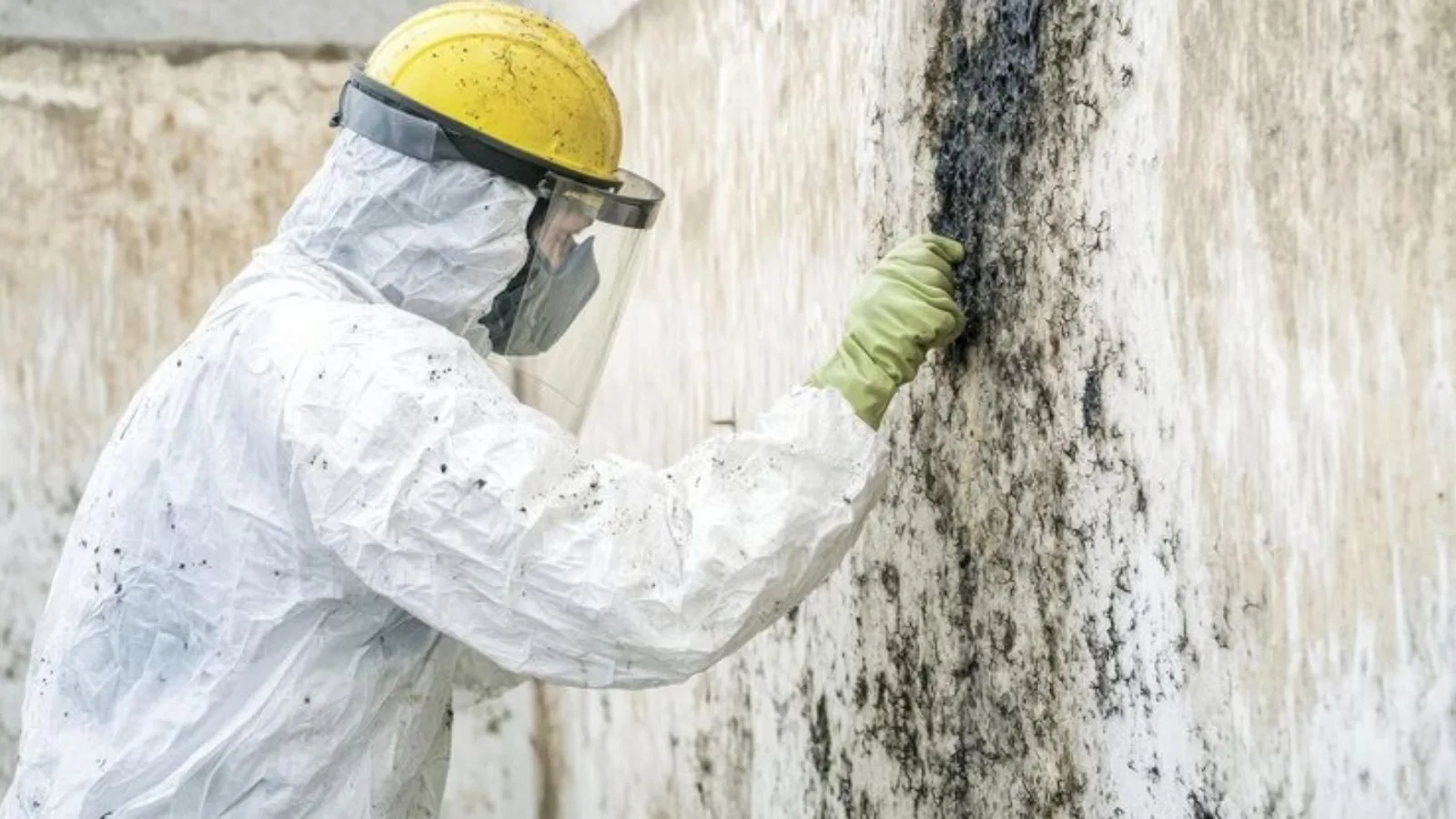
Mold damage removal usually means taking out the materials mold has grown into, cleaning what can be cleaned and rebuilding the space. This guide focuses on that middle step: how crews decide which materials leave the house and which stay. It follows the ideas in ANSI/IICRC S520 and does not replace a written scope for your home.
Remember that removal is only part of the job. Without a dry building and a fixed moisture source, new growth can start again, as the mold remediation page explains.
Porous, semi-porous and non-porous materials
The core idea is porosity. Mold sends roots into porous materials, so surface cleaning cannot reach them. Non-porous materials let growth sit on the surface, so cleaning can work.
The table below shows how crews usually sort common household materials. A given job can differ based on how long the material was wet and how much growth is present.
| Material | Category | Usual approach |
|---|---|---|
| Drywall and plaster board | Porous | Removed if growth is present |
| Insulation and carpet pad | Porous | Removed and replaced |
| Carpet | Porous | Often removed, sometimes cleaned if growth is light |
| Wood framing | Semi-porous | Cleaned and dried, sometimes sanded |
| Concrete and block | Semi-porous | Cleaned and dried |
| Glass, metal, tile | Non-porous | Cleaned and kept |
A written scope shows what comes out and why. Call (833) 521-1033.
Call (833) 521-1033Why crews cut a clean line
When drywall comes out, the cut goes past the visible growth into material that looks clean, usually to a stud line. Mold can be present in material that has not yet changed color, and a ragged cut near the stain leaves the problem in place.
Photographs of the cut line help you and your insurer see what was removed. Ask for them when the work is done.
Wood framing and what sanding does
Wood studs and joists can often stay. After removal of the board around them, the surface is cleaned with HEPA vacuuming and damp wiping, and sometimes sanded to remove staining and growth. Wood that is soft, crumbling or rotted is a structural question and not a mold question, so a builder or engineer weighs in.
What you should not do while you wait
- Do not sweep or dry brush the growth, which sends spores into the air.
- Do not run a fan across the area.
- Do not cut into a wall without containment.
- Do not cover the growth with paint or sealant.
- Do not keep using a room with active leaks above it.
Rebuilding after removal
After removal, cleaning and drying, the rebuild starts. That includes new insulation, drywall, taping, texture, paint and trim. The remediation scope and the rebuild scope are often separate line items, and you can ask for them to be written that way.
If your insurer is involved, confirm which part they treat as remediation and which as ordinary repair, because those can have different limits.
How crews protect the rest of the house
Containment keeps disturbed spores from traveling. A typical setup uses plastic sheeting sealed with tape, a zipper door for entry and a HEPA air scrubber that pulls the work area under slight negative pressure. Air then flows into the work area and out through the filter, instead of into the rest of the home.
Crews also cover floors, seal vents in the work zone and wear respirators and disposable suits. Debris is bagged inside containment, so it is not carried through the house.
Contents and belongings
Items in the work area are cleaned, moved or discarded depending on what they are made of. Hard goods can be wiped with HEPA vacuuming and damp cloths. Soft goods with growth, such as upholstery and stuffed toys, are usually thrown away.
If your insurer needs a list of discarded contents, photograph items before they are bagged and keep the list with your claim paperwork.
Basements, closets and bathrooms in this area
The places mold damage is most often found in Huntingdon Valley homes are the same as elsewhere in the humid mid-Atlantic: basements after heavy rain, bathrooms with weak ventilation, and closets against exterior walls. Local storms such as the July 2025 Lower Moreland flash flooding put extra water into low areas, and wet drywall that sits for days is the usual starting point.
If you find damage after a storm, work backward from the water entry point. Fixing a downspout or grading problem is as important as the removal itself.
Questions people ask
How long does mold damage removal take?
It depends on the area, the materials and the drying time. A written scope should give a realistic schedule, and we do not promise a fixed duration over the phone.
Do I need to leave my house?
Not always. Containment is meant to keep the work area separate. Larger jobs or sewage involvement may call for staying elsewhere, and a physician can advise anyone with health concerns.
Can mold be removed from furniture?
Hard furniture can often be cleaned. Upholstered items with growth are usually replaced.
Does removal include repainting?
Rebuild work is usually scoped separately from removal. Ask for both in writing.
Should I call my landlord or insurer first?
Tell them soon, and take photos before work begins. The order matters less than documenting the condition.
For wet materials that have not yet grown mold, structural drying and dehumidification is the faster fix. If you rent or own in Bryn Athyn or Southampton, the same steps apply. Call (833) 521-1033 to have an area looked at.