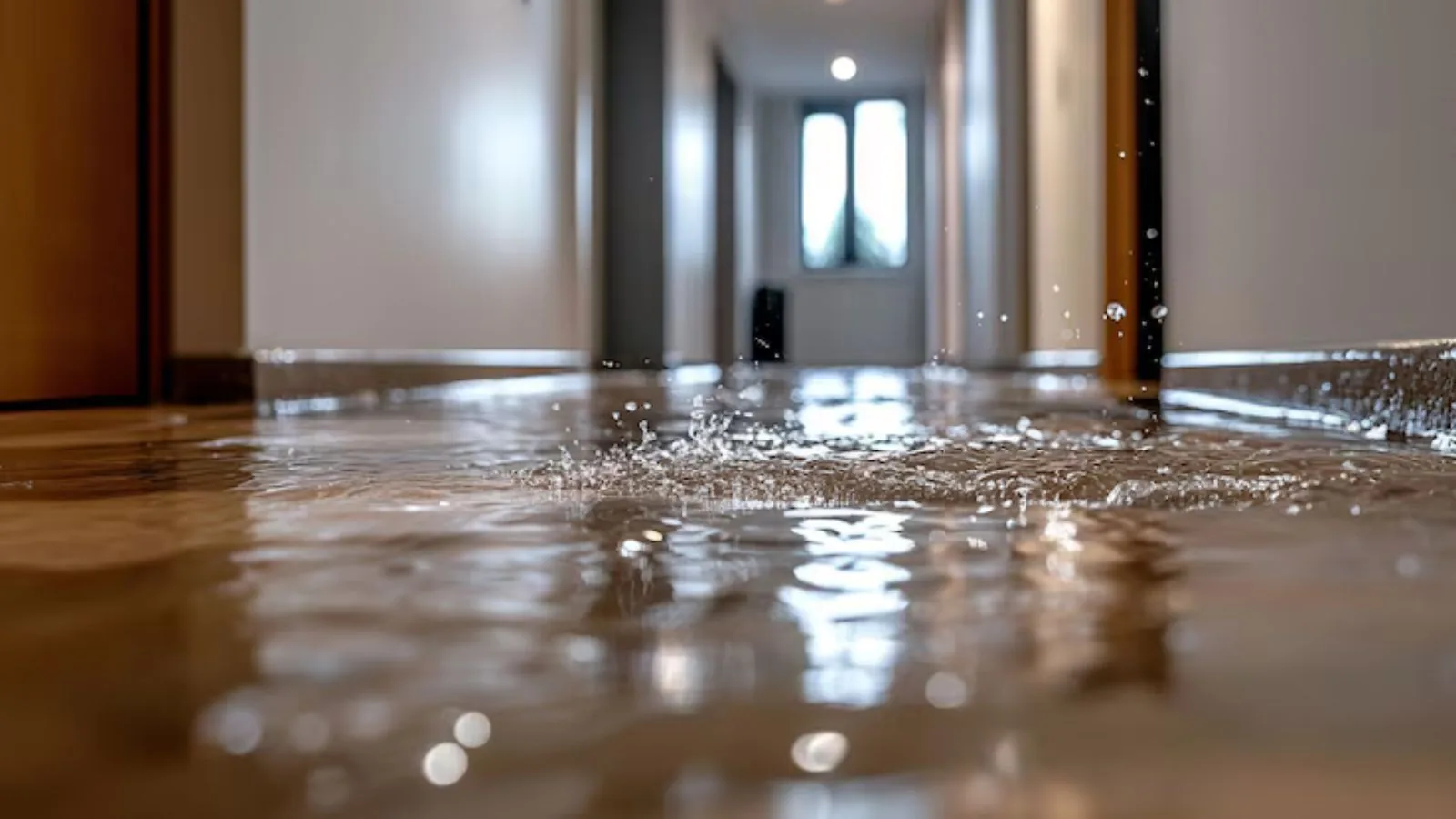
Not every wet floor needs a restoration crew. A few ounces of clean water from a tipped glass or a small appliance drip on a tile floor is a cleanup, not a loss. This guide explains a sensible dividing line so you do not call too early for a spill or wait too long on a real problem.
The test is not how wet the floor looks. It is the source of the water, how much of it there is, how long it has been wet and what it soaked into.
Start with the water category
Restoration standards sort water into three categories. Category 1 is clean water from a supply line or a tap. Category 2 is used water with some contamination, such as a washing machine or dishwasher discharge. Category 3 is grossly contaminated, such as sewage or floodwater, and it is never a do-it-yourself job.
Clean water becomes less clean with time. After about two days, Category 1 water that has soaked into carpet or drywall may be treated as Category 2 because bacteria grow.
| Situation | Handle yourself? | Why |
|---|---|---|
| Small clean spill on tile, under a few square feet | Yes | Surface only, easy to dry |
| Clean water on a hard floor, dried within hours | Usually | Check the edges and baseboards |
| Wet carpet and pad | Rarely | Pad holds water and needs extraction |
| Water in a wall or ceiling | No | It needs meters to find and dry |
| Dishwasher or washer overflow | Depends on size | Category 2, needs care |
| Sewage or floodwater | No | Category 3, health risk |
Describe what you see. Call (833) 521-1033.
Call (833) 521-1033What you can do safely right away
- Stop the source if you can reach it, such as the shutoff valve at a fixture.
- Turn off power to wet areas only if you can reach the panel while dry.
- Wipe up and mop standing water with towels.
- Lift furniture off wet carpet and put foil under legs.
- Open windows and run fans and a dehumidifier in the room.
Why surface dry is not dry
A floor that feels dry can still be wet below. Water wicks into baseboards, subfloor and the bottom of drywall, and a surface that looks fine can hold moisture for days. That hidden moisture is where mold and odor start.
A moisture meter tells you what your hands cannot. Many people who dry things themselves skip the measuring, which is why a musty smell turns up two weeks later.
When to call right away
Call if water reached a wall, a ceiling, an electrical outlet, a heating system or more than a room. Call if the water came from outside, from a drain or from a toilet. Call if you cannot find where it is coming from.
Also call if the wet area has been damp for more than a day or two. At that point drying tools and measurement matter more than towels.
A practical way to check your own work
- 1
Day one
Remove standing water, ventilate and start a dehumidifier.
- 2
Day two
Touch baseboards and the lower few inches of the wall for coolness or dampness.
- 3
Day three
Look for peeling paint, staining, cupping floors or a musty smell.
- 4
Day four
If any sign remains, call for a moisture assessment before it spreads.
Using a dehumidifier well
A dehumidifier works better in a closed room, so close doors and windows once the surface water is gone. Set it to around 40 to 50 percent humidity and empty the tank or run a hose to a drain. Moving air across the wet surface with a fan helps the moisture reach the dehumidifier.
Check the room each day. If the humidity does not fall, or the wall still feels cool, something is still wet that your tools cannot reach.
Common mistakes
The most common mistake is stopping too early. A floor that looks dry is not a finished job. Another is closing up the area with plastic sheeting, which traps moisture, or running a space heater at a wet wall, which can dry the surface and leave the inside wet.
A third mistake is ignoring smell. A musty odor is information. It means moisture is still there.
A note for Lower Moreland and nearby homes
Basements here, especially those with finished space, can look dry while the lower edge of the wall stays damp. After heavy rain such as the July 2025 flash flooding in Lower Moreland, check baseboards and the bottom of finished walls for several days.
Many older homes also have older plaster, which can hold moisture differently from drywall. If a wall stays cool to the touch, a meter reading is worth the call.
Questions people ask
Can a wet vac be enough?
For a small clean spill, yes. For carpet, pad or anything beyond a room, extraction equipment removes more water.
Is a box fan enough to dry a room?
It helps with the surface and not much beyond that. A dehumidifier and measured drying work better.
How can I tell if a wall is still wet?
Cool or damp feel, staining or a musty smell are signs. A meter is more reliable.
What about hardwood floors?
They can cup if water gets underneath. Extract quickly and watch the boards for several days.
Should I tear out wet carpet myself?
Lifting a corner can help, but cutting and removing carpet and pad is easier with the right tools and safety steps.
When the job is bigger than towels, water extraction followed by structural drying is the usual path. We take calls from Southampton and Bryn Athyn too. Call (833) 521-1033 at any hour.